





The post on the Good Housekeeping website was titled “8 Dog Food Brands Vets Actually Recommend.” Good Housekeeping consulted with two veterinarians for their pet food recommendations, Dr. Alejandro Caos and Dr. Megan Conrad.
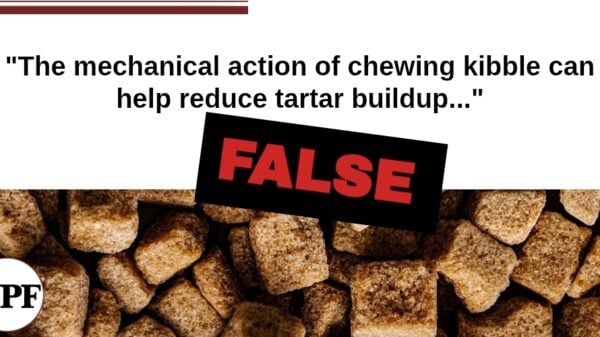
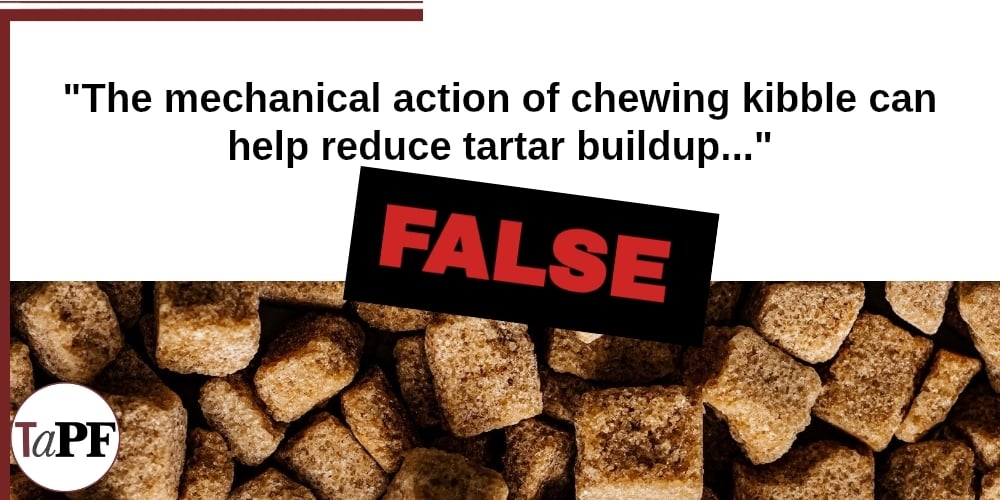
Their number one “Best Overall” pick for dog food was Nutro Ultra Dry Dog Food. Dr. Caos stated about this brand: “The crunchy texture can help promote dental health,” he says. “The mechanical action of chewing kibble can help reduce tartar buildup and maintain healthier teeth and gums, while the abrasive action of chewing can help scrape away plaque.”
Unfortunately, Dr. Caos’s statement is not true. Kibble/dry dog food does not reduce tartar buildup. A dog or cat chewing typical kibble does not scrape away plaque. There are some kibble pet foods that do meet veterinary standards to make the claim of tartar reduction, this dog food is not one of them.
The same veterinarian in the Good Housekeeping post gave this information about what is important in selecting a pet food: “Healthy dog food should provide balanced nutrition, use high-quality ingredients, promote proper digestion, and be suitable for your dog’s life stage and any unique dietary considerations.”
This statement makes sense, however it is a general statement that doesn’t provide pet owners with much assistance. What are ‘high-quality ingredients’?
The other veterinarian consulted for the Good Housekeeping post, Dr. Conrad, “highly recommends” Purina ProPlan stating this dog food is “one of the most nutritionally balanced options on the market.” What does she mean by “nutritionally balanced”? Why is this dog food more ‘nutritionally balanced’ than most other dog foods?
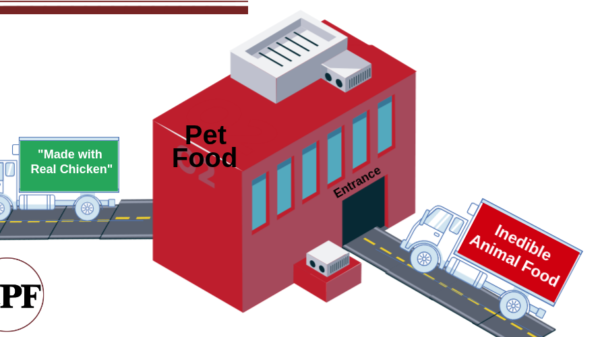
In all the pet foods Good Housekeeping recommended, only one is human grade (Ollie Pet Food). But…Good Housekeeping and their veterinarians did not explain to pet owners the difference with this food than all the other brands recommended (human grade vs all others are feed grade), they only stated the Ollie pet food was “homemade-looking dinners.”
Disappointing.
The Good Housekeeping website states: “For more than 125 years, Good Housekeeping has been evaluating products and advocating for consumers.” In this case, Good Housekeeping and the veterinarians they consulted with dropped the ball.
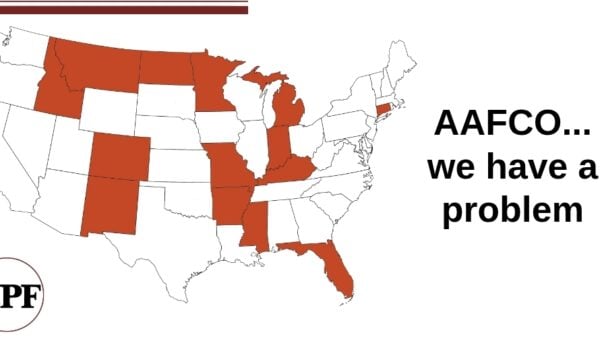
Unfortunately, Good Housekeeping and the veterinarians they consulted with have probably never been to an AAFCO meeting, don’t own the pet food regulations rule book (the AAFCO Official Publication), and are unaware that the FDA has ever made public statements similar to this: “We do not believe that the use of diseased animals or animals that died otherwise than by slaughter to make animal food poses a safety concern and we intend to continue to exercise enforcement discretion.” We have to assume that Good Housekeeping and their veterinarians do not know there are feed grade ingredients and human grade ingredients used in pet foods.
But they should know.
We sent Good Housekeeping an email explaining how their pet food advice could mislead pet owners.
With the veterinarians Good Housekeeping consulted with, their words were not much different than what many veterinarians tell pet owners on a daily basis. Their words do not make them bad veterinarians, it only shows they are not informed about pet food.
If your veterinarian makes statements like the above, ask them questions. What do you mean by ‘quality ingredients’? Are they human grade or feed grade ingredients? What do you mean by ‘one of the most nutritionally balanced options’? Do you have peer reviewed science to evidence that? Can you share it with me?
Keep speaking up. Be respectful, tactfully hold them accountable for their pet food advice.
Susan Thixton
Pet Food Consumer Advocate
TruthaboutPetFood.com
Association for Truth in Pet Food
Find Healthy Pet Foods in Your Area Click Here

The 2026 List
Our trusted ‘list’ of pet foods. Click Here to learn more.
The 2026/27 Treat List
Susan’s List of trusted pet treat manufacturers. Click Here to learn more.

Association for Truth in Pet Food is a stakeholder organization representing pet food consumers at AAFCO and with FDA. Your membership helps representatives attend meetings and voice consumer concerns with regulatory authorities. Click Here to learn more.



bren smith
September 3, 2026 at 2:23 pm
I read a book Pet Food, Pets Die For, by pet food researcher Ann Martin. Pet food industry is a horrific industry. I try to feed real food, 1 tablespoon Kefir daily for probiotics, 1/3 teaspoon ground Kelp powder or Kelp granules for a the whole range of balanced minerals as I watched a documentary by Maynard Murray about the amazing benefits of kelp for healthy farm animals, healthy pets, healthy people and healthy yards and healthy gardens. We helped my grandparents gather the seaweed at the seashore and cover the garden in seaweed for mulch. Why buy chemical cancer causing fertilizer for your yard or garden. Some stores do sell Kelp meal for gardens. I buy kelp granules by the pound and add 1/3 teaspoon to my pets food and my decaf coffee. I also add 1/3 ground flaxseed. I add a whole raw egg to each pet’s meal and crush up the egg shell for calcium. To prevent can cer, stop toxic va….. that is the biggest cause of increased cancer rates in pets and people. Learn better and do better. We are guardians to our pets. Protect your pets from the very profitable harma industry that want to inject poisons to cause can cer and chronic allergies, seizures, chronic disease, lumps, bumps, ear issues, digestive issues, itching issues, can cer and premature lifespan. Just say no to injected toxins and yes to health
Adele Gaskin
September 3, 2026 at 2:49 pm
Shocked that vets still think kibble removes tartar! They were saying that 30 years ago and it was BS. You can’t rely on vets for solid info- you’re on your own.
Barbara Fellnermayr
September 3, 2026 at 4:00 pm
That’s the equivalent of telling a child to go brush their teeth with a chocolate chip cookie!
I wonder who pays these vets for their opinions?? Big pet food!
This is getting so tiring, I’ve only been fighting this for 21 years. I feel the frustration for people that have been instrumental in fighting the battle. I thank you for keeping up the good fight.
Susan, thanks for your hard work.
Bethany
September 3, 2026 at 4:40 pm
I’m sorry to have to disagree with you, Susan, but I do think their ignorance and bad advice do make them bad veterinarians. This is their profession! If I can educate myself as a layperson on these topics, then they should at least know as much as a professional in the field.
Barb
September 4, 2026 at 11:03 am
I’ve lived with cats and dogs for many years suspecting but having no evidence kibble is bad for our pets. Thank you so much Susan for your diligence and caring.