



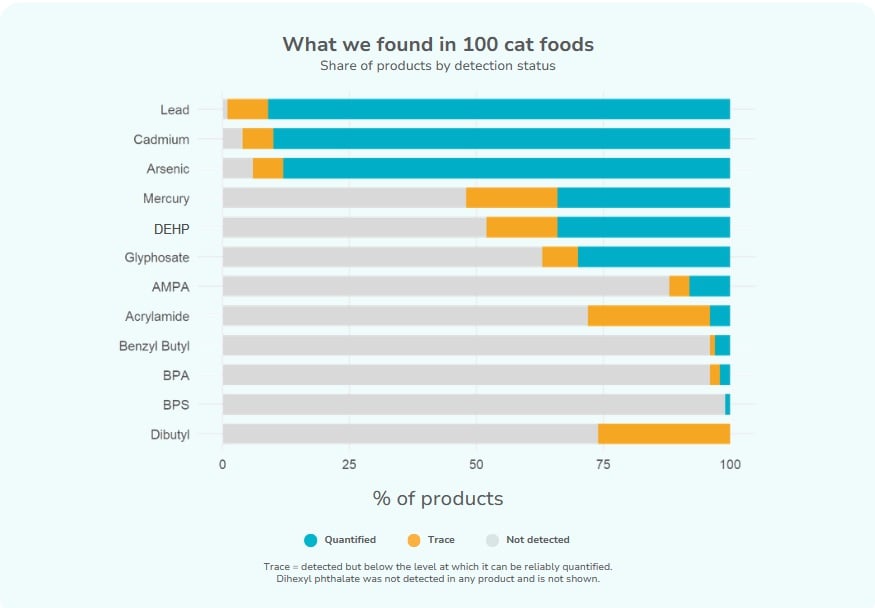
The Clean Label Project recently published a testing results project titled “Heavy Metals Found in Up to 99% of Cat Food Products Tested Across 62 Brands.” The graphic below shows what the Clean Label Project tested for and what their results evidenced.
From the Clean Label Project summary:
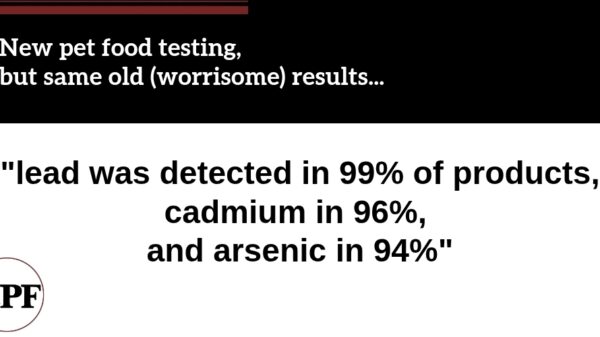
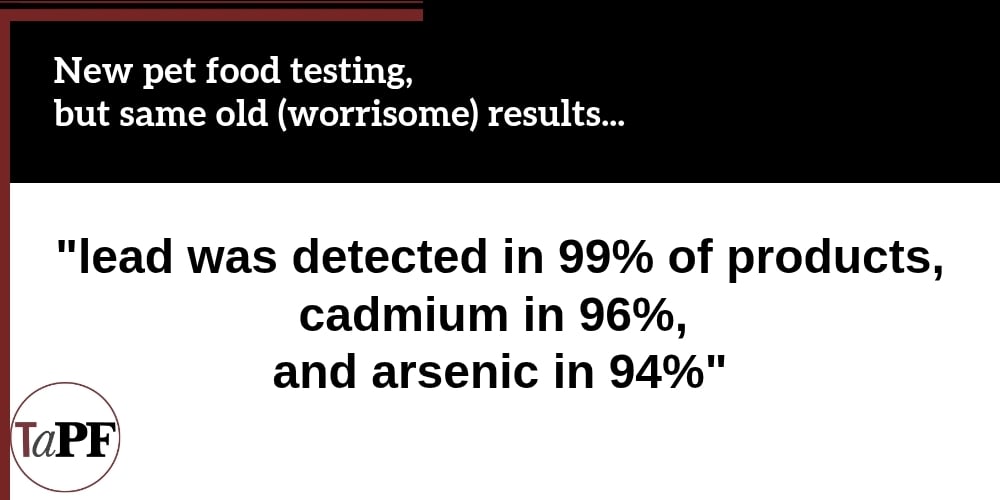
- “In our testing, lead was detected in 99% of products, cadmium in 96%, and arsenic in 94%. Lead levels are higher in dry food. Dry food carried roughly 3x the lead of wet or air-dried food.”
- “When it comes to mercury, fish-based cat foods had much higher levels. Cadmium also appears to be in higher concentrations in fish-based diets, at about 2.5x other products.
- Herbicide levels were directly related to the amount of plant ingredients in a product. On average, glyphosate levels increased by about 40% for each additional plant ingredient among the first ten listed on the label.”
- “DEHP, a phthalate linked to hormone disruption, was detected in 48 of 100 products — more than anything except the heavy metals. It turns up at similar rates in every type of cat food—wet, dry, canned, and pouched—but canned and pouched products carry about five times as much.”
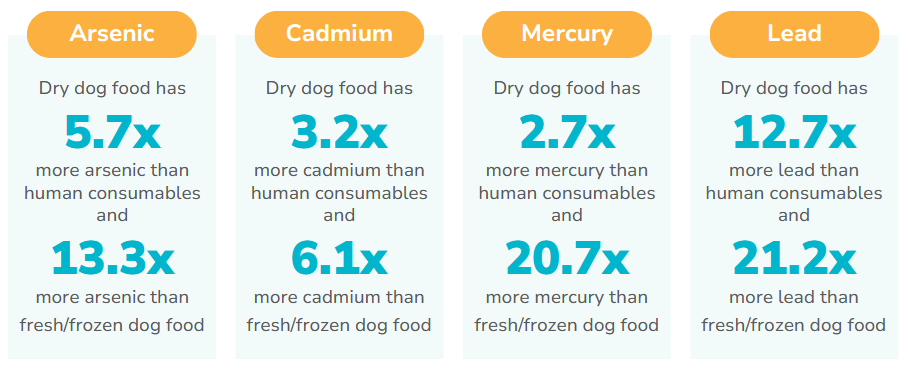
Earlier this year (February 2026), the Clean Label Project published results on dog food; “Extremely High Levels of Lead, Mercury, Arsenic, and Cadmium Found in Dry Dog Food.” In this testing, Clean Label Project compared results to human food testing results and found that fresh/frozen dog foods tested remarkably better than dry foods. From their dog food testing results:
In 2009 and again in 2019 SPEX CertiPrep tested pet foods for heavy metals. Briefly, their findings:
- “In 2009, there were significant amounts of metals found in the pet food, with 215 ppm aluminum and over 1 ppm of several potentially toxic metals, including chromium (2.5 ppm), nickel (3.2 ppm), lead (6 ppm), and tin (9.4 ppm). There was 0.5 to 1 ppm of antimony and cobalt. Some foods had correlations of ppm levels of nickel and tin showing large amounts of potential wear metal contamination from the manufacturing equipment. There was even uranium detected in several samples up to 1 ppm.”
- ““The samples from 2019 still showed heavy metal contamination, including twice the amount of uranium (1.7 ppm), and three times the amount of arsenic (0.7 ppm). Lead levels were significantly lower overall in the 2019 samples with a maximum of 0.5 ppm.”
In 2021 the University of Nevada Reno published heavy metal pet food testing results found “concentrations of mercury that are high for chronic consumption” and performed DNA analysis on pet foods finding “Every sample we looked at had some inaccuracy, based on our results, some more egregious than others. As for the DNA results, generically speaking, we found that many of the pet food products were comprised of low-value ingredients, such as chicken, and that products claiming to be made from high-value ingredients, such as fish and novelty proteins, typically contained more low-value ingredients than high-value ingredients.”
The above are just a small snippet of studies previously performed on pet foods over the past years. With regards to heavy metal contamination in pet food, the FDA states:
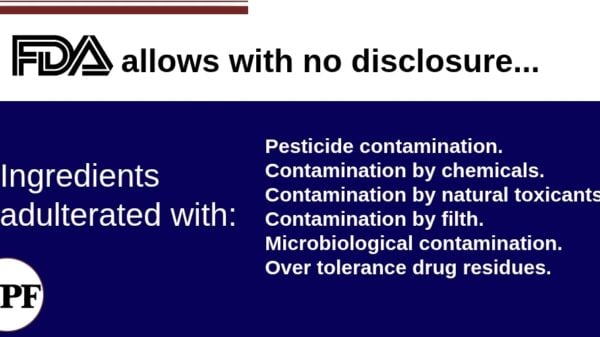
“While the FDA CVM has not promulgated guidance, action levels, or tolerances for heavy metal levels in animal food, the FDA has—and uses—the authority to take action on a case-by-case basis where a particular animal food is found through routine or targeted testing to be adulterated. This is accomplished by taking into consideration information provided in the National Research Council of the National Academies Mineral Tolerance of Animals book (NRC) as well as information provided in the Association of American Feed Control Officials Official Publication (AAFCO OP).“
Translated into non-legalese (understandable) language…
- The FDA has NOT established any maximum allowed levels for heavy metals in pet foods. This means ANY level of lead, mercury, and so on is acceptable in pet food unless the rare chance a manufacturer would get caught (close to impossible) with some absurdly high level.
- The FDA relies on the antiquated Mineral Tolerance of Animals book, published by the National Research Council in 2005.
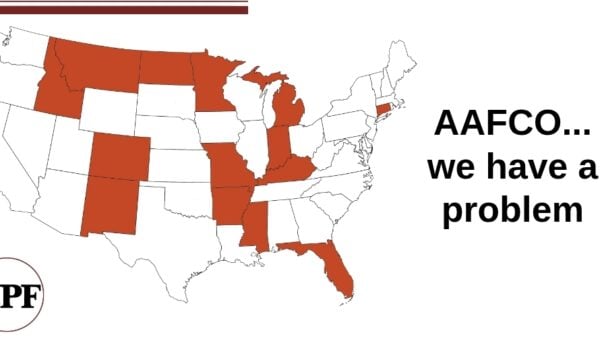
- The FDA passes of some responsibility to AAFCO, who also has NOT established any maximum levels for heavy metals in pet foods.
The Clean Label Project Cat Food report states it very well:
“While human foods can often be compared to third-party regulatory thresholds,
few (if any) regulations exist surrounding these contaminants in cat food. The few reference values that do exist for animal feed—maximum tolerable levels published by the National Research Council and the Association of American Feed Control Officials (AAFCO)—were derived to prevent acute poisoning in livestock, not to protect a housecat eating the same food every day for fifteen years. These regulations, heavily influenced by trade, provide false security and a ready-made excuse to reassure consumers about the products’ purported safety.”
Our question to FDA is:
How many studies evidencing US pet food is frequently contaminated/adulterated is it going to take for FDA to establish maximum allowed levels for heavy metals, pesticides, plastics in pet foods?
Susan Thixton
Pet Food Consumer Advocate
TruthaboutPetFood.com
Association for Truth in Pet Food
Find Healthy Pet Foods in Your Area Click Here

The 2026 List
Our trusted ‘list’ of pet foods. Click Here to learn more.

The 2026/27 Treat List
Susan’s List of trusted pet treat manufacturers. Click Here to learn more.

Association for Truth in Pet Food is a stakeholder organization representing pet food consumers at AAFCO and with FDA. Your membership helps representatives attend meetings and voice consumer concerns with regulatory authorities. Click Here to learn more.



Adele Gaskin
October 6, 2026 at 12:31 pm
I wish they would differentiate between rendered food and pet grade not with rendered ingredients. My cats will not eat the human grade with blueberries and grapefruit and other ingredients that are not really for cats so I do the best I can with 13 cats.
T Allen
October 6, 2026 at 1:38 pm
The answer to your question Susan is, “infinite”. The only way it’ll ever happen is if 1. Everyone stops buying the toxic waste to feed their pets or 2. If if they find another market for the waste that pays more than pet food prices. The chances of either happening is infinitesimal. 🙁