







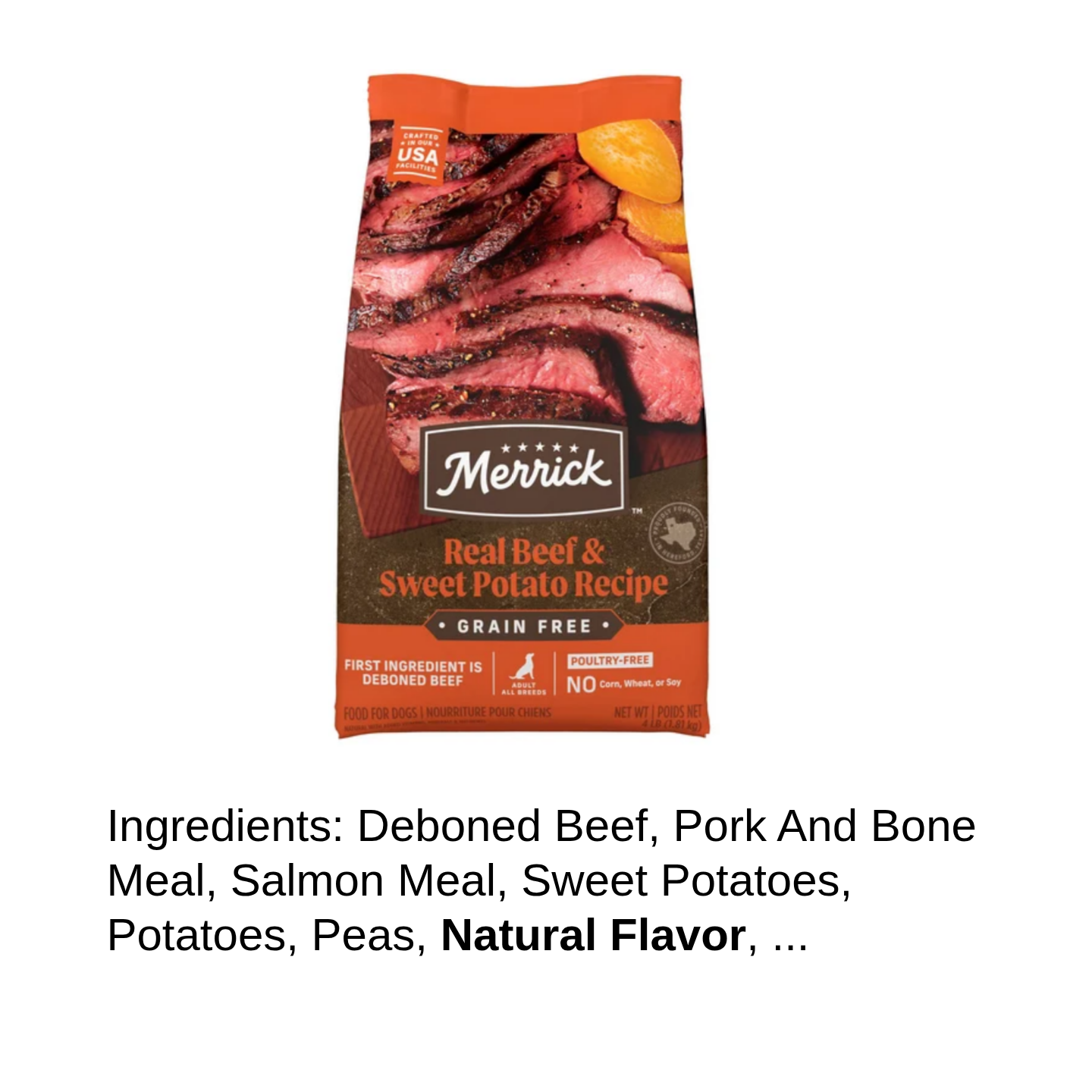
Why would a dry dog food made with “real beef” – displaying almost half of the front label with that beef…need a flavor ingredient added to the food? Wouldn’t/shouldn’t all that ‘real beef’ be sufficient flavoring?
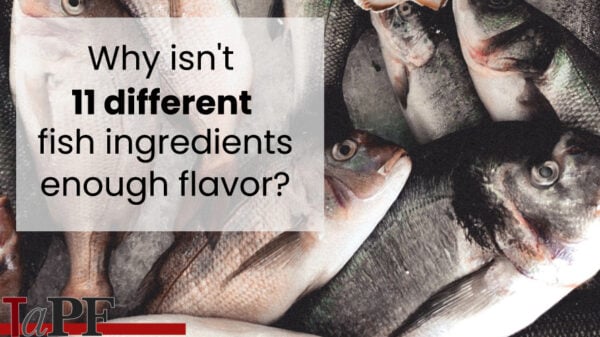
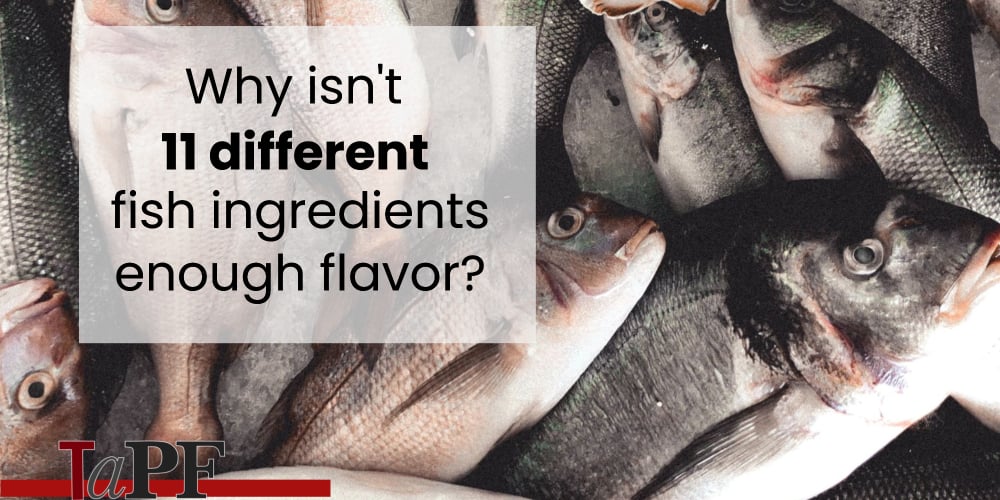
Why would a dry cat food that lists 11 different fish ingredients (whole herring, salmon, flounder, Acadian redfish, monkfish, whole hake, sardine meal, herring meal, blue whiting meal, salmon meal, and pollock meal) also need a “natural fish flavor” ingredient?
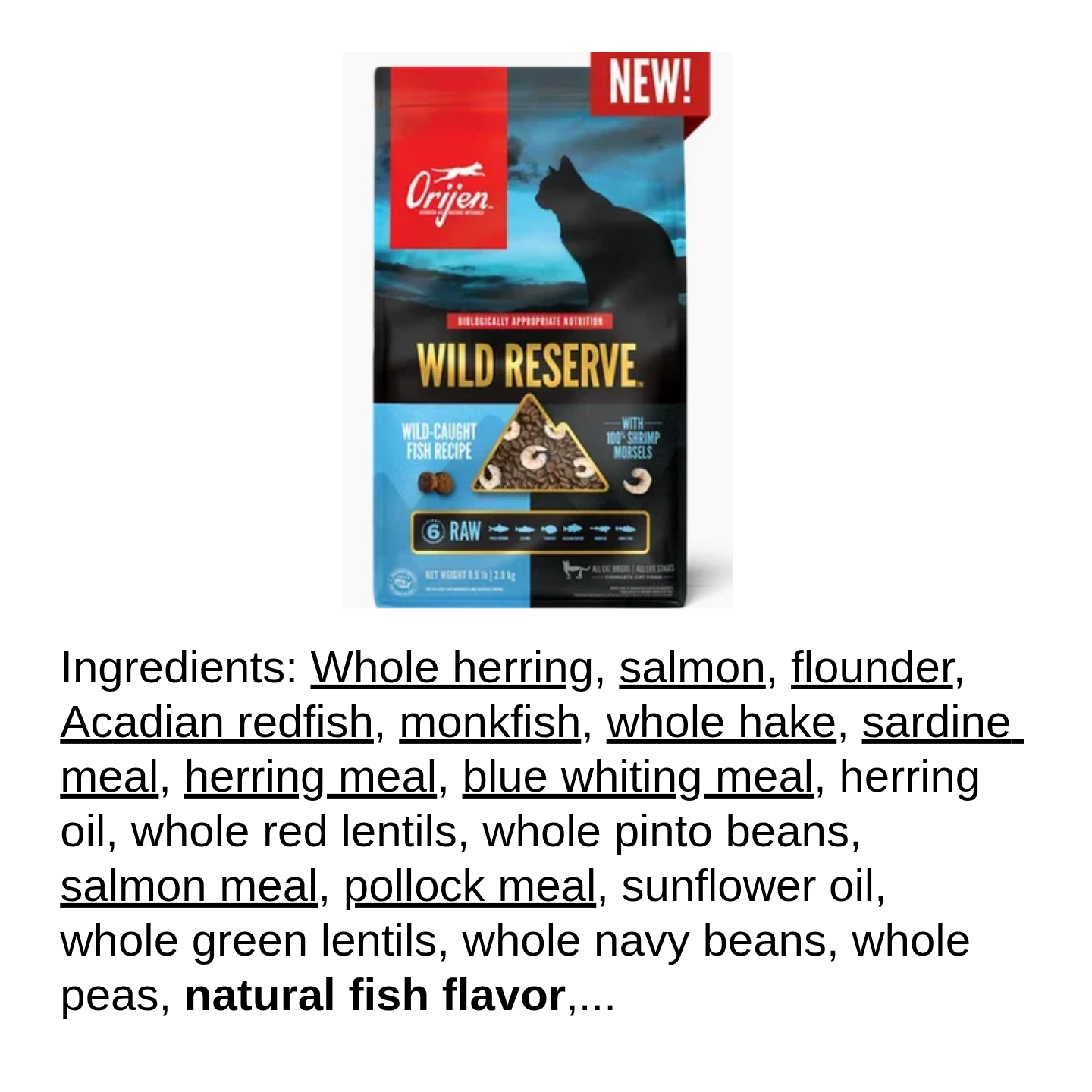
And…flavor ingredients are not limited to dry pet food.
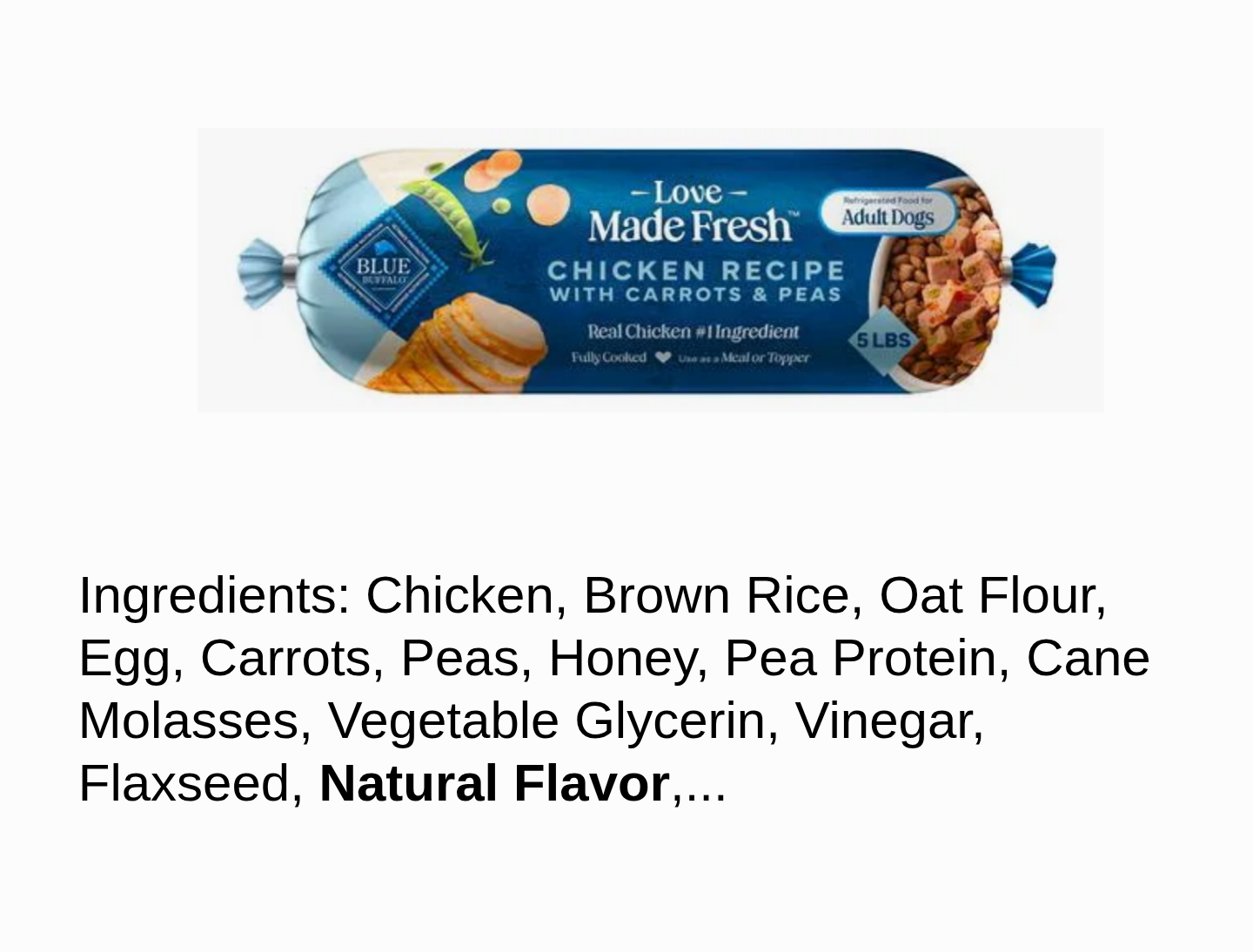
This roll pet food claims “Crafted with real chicken and wholesome fruits & veggies and cooked to perfection…” If it is made with real chicken and cooked to perfection, why would a natural flavor ingredient be necessary?
And this cat food claims “Crafted with real, high-quality beef”, but it includes artificial and natural flavors.
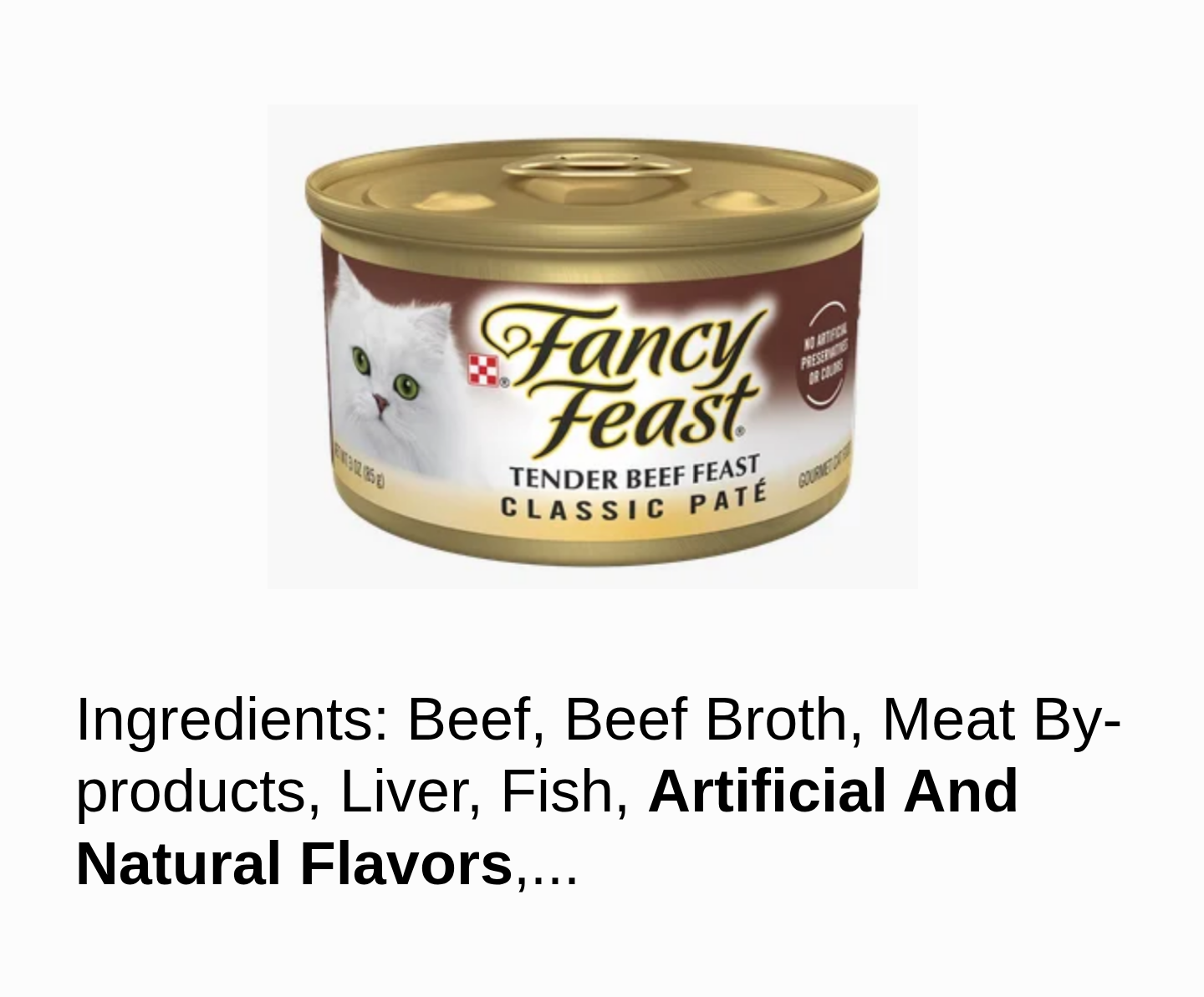
But…flavor ingredients are not uniformly used across brands.
Orijen – the manufacturer of the cat food above that included 11 different fish ingredients AND a fish flavor ingredient – also makes a human grade pet food that DOES NOT include a flavor ingredient.
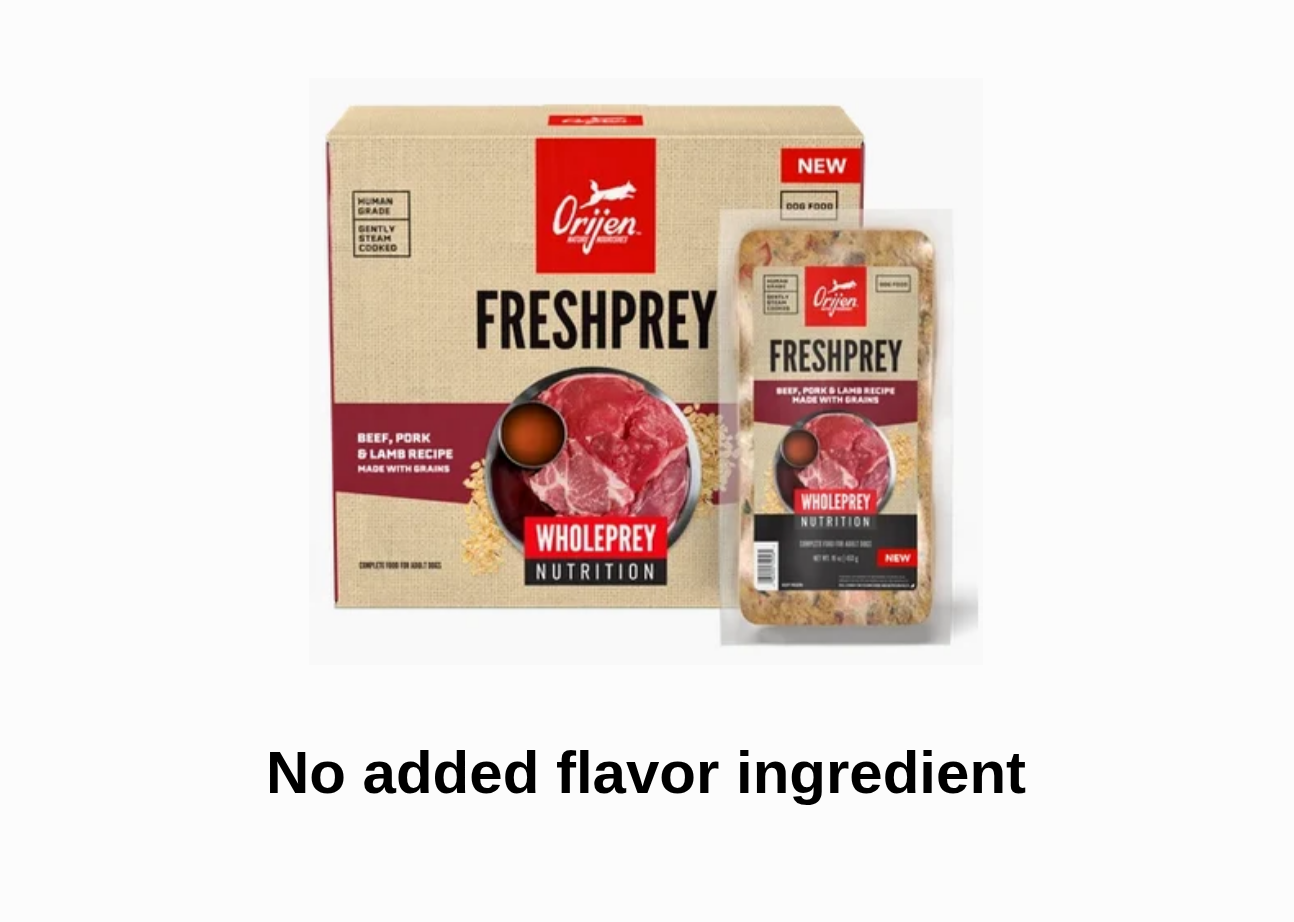
Why do some pet foods include a flavor ingredient and some do not?
Can pet owners assume that flavor ingredients are added to make unappealing, processed ingredients taste and smell delicious to pets?
Conversely, can pet owners assume pet foods without added flavors rely on the natural, high-quality aroma and taste of minimally processed real meat, fish, and whole ingredients to entice your pet to eat?
What we do know about flavor ingredients.
Pet owners are not told what is actually in that artificial or natural flavor ingredient. We asked the FDA (at an AAFCO meeting) why the ingredients used in flavorings are not disclosed to pet owners? Dr. William Burkholder of FDA Center for Veterinary Medicine shared that flavorings are proprietary, comparing them to a chef’s secret recipe.
Several years ago Popular Science published an article about the science behind pet food flavorings. The article explains for dog foods “The challenge is to find an aroma that drives dogs wild without making their owners, to use an Amy McCarthy verb, yak.” The focus with dog foods is smell.
The representative interviewed (Nancy Rawson of AFB Internation) stated: “Cadaverine is a really exciting thing for dogs, says Rawson. Or putrescine.”
From Wikipedia: “Cadaverine is a colorless liquid with an unpleasant odor. Together with putrescine, it is largely responsible for the foul odor of putrefying flesh, but also contributes to other unpleasant odors.”
For cat foods the focus is on taste. “Pyrophosphates have been described to me as ‘cat crack.’ Coat some kibble with it, and the pet food manufacturer can make up for a whole host of gustatory shortcomings.”
Pyrophosphates trigger specific receptors on a cat’s tongue, intensifying the flavor of the amino acids found in animal proteins.
If your pet’s food contains a flavor ingredient – for a dog food, ask the manufacturer if cadaverine or putresine is included. For a cat food, ask if pyrophosphates are included. Ask the manufacturer to explain why a flavor ingredient is necessary when ‘real meat’ or ‘real fish’ is included.
Susan Thixton
Pet Food Consumer Advocate
TruthaboutPetFood.com
Association for Truth in Pet Food
Find Healthy Pet Foods in Your Area Click Here

The 2026 List
Our trusted ‘list’ of pet foods. Click Here to learn more.

The 2025/26 Treat List
Susan’s List of trusted pet treat manufacturers. Click Here to learn more.

Association for Truth in Pet Food is a stakeholder organization representing pet food consumers at AAFCO and with FDA. Your membership helps representatives attend meetings and voice consumer concerns with regulatory authorities. Click Here to learn more.



Andrea L Spissinger
May 27, 2026 at 6:35 pm
Susan,
Once again, you’ve provided petowners with exceptionally important information!
I do have a question, though: Are you suggesting that Cadaverine (from actual cadavers???) Or Putrescine ( really putrid???) are ingredients to stay away from? Or can you not make that inference and we should just search them and come to our own conclusions? (I’ll do that anyway!)
Also, can I have permission to re-post your article?
Many thanks, again.
Andrea and Joey, The First
Susan Thixton
May 27, 2026 at 6:40 pm
I would never allow my own pets to eat a food or treat that contained cadaverine and or putrescine.
T Allen
May 27, 2026 at 7:00 pm
Which is why you’ll never know if it’s in it or not. 🙁 You trust the feed company to tell the truth?
Sandy M.
May 27, 2026 at 10:04 pm
Seems to me that cadaverine and putrescine are a result of rotting ingredients. Our pets are not garbage disposals! Sure, I’ve had more than one dog in my life that has attempted to roll around in a rotting fish found on the beach. Our pets are counting on us to keep ’em out of trouble. It’s sad that some pet food manufacturer’s will stop at nothing to sell their junk to you and get your pet to eat it so you’ll buy it again. Thank you Susan for sharing this issue and for all you do.
Janet Johnson
May 28, 2026 at 12:31 am
Wow, I study pet foods and their ingredients a lot, and I never knew this. Great information — thanks! I am on Social Security with four dogs and three cats, so I can’t afford the fanciest brands. I make sure there is meat as the first ingredient at the very least, and I look everything up on Dog Food Advisor. I was so tickled to find a newish brand that they actually liked — Jinx — had a 5/5 rating, and it’s much more affordable than some.
Another beef I have, pun intended, is that I was trying to find what my Papillon was allergic to. She had no fleas and even her skin looked okay, but she would cry out and scratch. I decided to only buy beef or fish food and see if chicken was the problem. Well, after buying a bunch I looked at the label, and sometimes beef wasn’t even the first ingredient! There was chicken in all of it! That is so misleading.
Keep up the great work of keeping us informed!
Wanda
May 28, 2026 at 1:56 am
I have found that Purina Fancy Feast classics in Australia have added sugar to their canned foods, which I can only assume it was in the label of natural ingredients? I messaged them and the response was We have used this ingredient (sugar) as it helps deliver the flavour of the product. The level used is safe to feed to your cat and will not cause any health issues when fed appropriately. You can read more about the use of Sugar in Pet food here:
https://www.purinainstitute.com/sites/default/files/2024-02/HOT-TOPIC-Sugar-in-pet-foods.pdf