


In December 2025, the US Environmental Protection Agency (EPA) added “rendering” to their suggested ways to dispose of food waste. Rendering was removed in 2023, but reinstated in 2025 thanks in part to a nudge from members of Congress.
Below is the graphic recently published by the EPA for ‘How to Reduce Environmental Impacts of wasted food’ which points out the most preferred method to least preferred method. Rendering food waste into feed for animals lands in the middle of the scale.

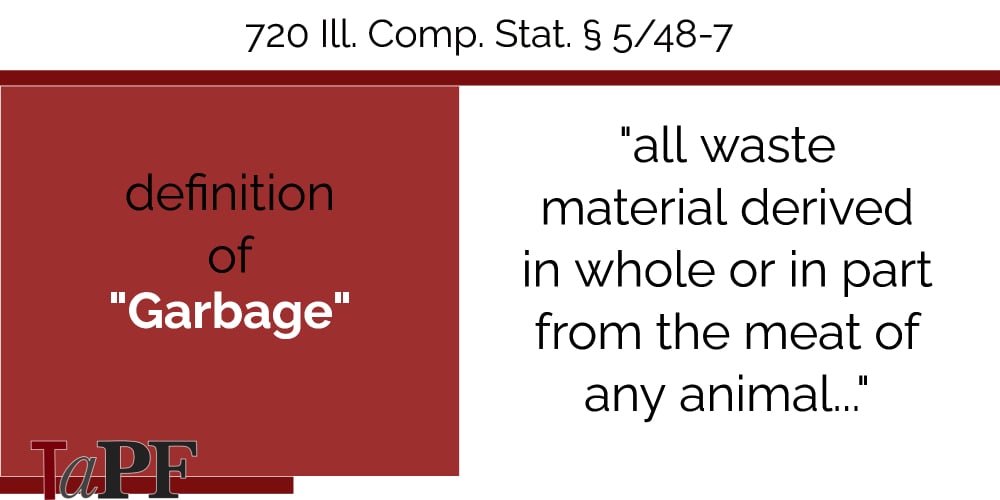
But…what the members of Congress who pushed for rendering to be an approved method of food waste disposal (for animal feed) probably were not aware of (but should be) is that most all US states define this material as “garbage” and with respect to pet food garbage, the members of Congress probably were not aware (but should be) that pet owners are NOT informed they are purchasing processed garbage.
As example, the state of Kansas defines “garbage” as: “47-1301. Garbage defined. As used in article 13 of chapter 47 of the Kansas Statutes Annotated, and amendments thereto, “garbage” means all waste material derived in whole or in part from the meat of any animal, including fish and poultry, other waste animal material, and other refuse of any character whatsoever that has been associated with any such material, resulting from the handling, preparation, cooking or consumption of food.”
This legal definition means – that in Kansas – the raw materials used to make many pet food ingredients are sourced from “garbage”. Almost every US State has similar laws defining “garbage”. (For the legal definition of ‘garbage’ in all US States, Click Here – starting on page 16.)
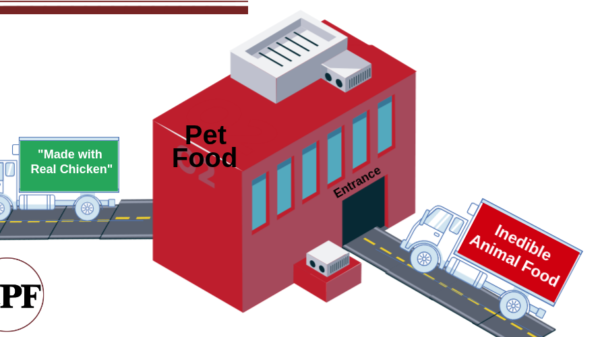
Deceptively, through AAFCO pet food and animal feed definitions – when the ‘garbage’ is included in a pet food or further processed through rendering, it becomes labeled as chicken or chicken meal or many other deceptive ingredient names on a pet food label with NO disclosure to the consumer that raw materials were originally legally classified as garbage.
There are federal laws that regulate what types of ‘garbage’ that ruminant animals (such as cattle) can consume, and there are federal laws that regulate what types of ‘garbage’ that swine can consume.
The Food and Drug Administration’s (FDA) Bovine Spongiform Encephalopathy (BSE)/Ruminant Feed Ban Rule prohibits the use of mammalian protein (i.e., animal tissue) in feeds for ruminant animals. The Federal Swine Health Protection Act requirements include: “before it can be fed to swine, most animal-based ‘garbage’ must be heated at boiling temperature (212 degrees Fahrenheit/100 degrees Celsius at sea level) for at least 30 minutes by someone who holds a valid license or permit for the treatment of garbage.”
But…there are NO laws restricting what types of ‘garbage’ that can be fed to pets (hidden from pet owners under a deceptively named AAFCO ingredient).
And to top it off, other laws absolutely prohibit most ‘garbage’ from being fed to any animal (livestock and pets).
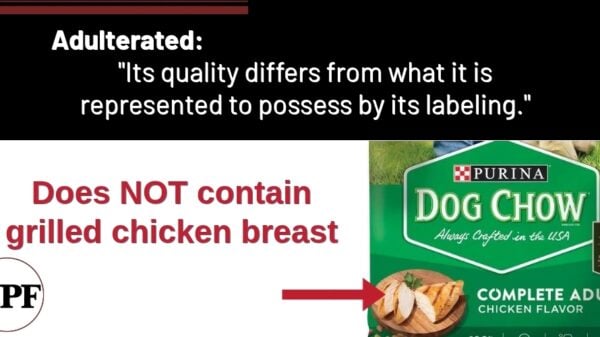
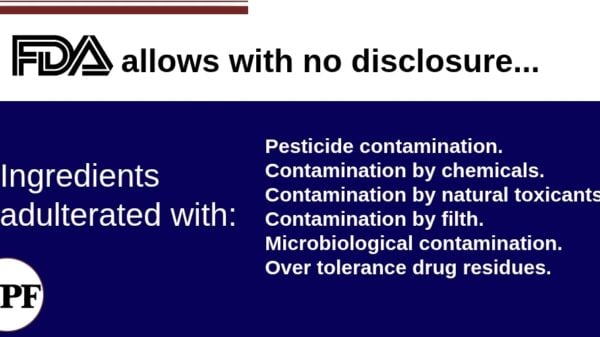
The Federal Food Drug and Cosmetic Act (FD&C Act) defines food as what humans and animals consume. These laws define an adulterated food (in part) as: “if it has been prepared, packed, or held under insanitary conditions whereby it may have become contaminated with filth”, “if it is, in whole or in part, the product of a diseased animal or of an animal which has died otherwise than by slaughter”.
In other words, federal laws prohibit what is defined as “garbage” in almost all states from being fed to any animal.
The FDA Center for Veterinary Medicine openly chooses to ignore these laws. In April of 2019 (in response to our Citizen Petition), the FDA CVM stated: “we do not believe that the use of diseased animals or animals that died otherwise than by slaughter to make animal food poses a safety concern and we intend to continue to exercise enforcement discretion.”
Questions:
Do you believe pet owners should be informed if a pet food contains processed garbage? How should it be labeled to clearly disclose that information to you?
Do you believe meat purchased in your grocery should disclose if the livestock animal was fed processed garbage? How should it be labeled to clearly disclose that information to you?
Personal note: My grandparents raised their dogs solely on food leftovers from the table, and leftovers from my Grandfather hunting and fishing (such as internal organs). When I was very young they also raised a few chickens. If chicken was to be served for dinner, my Grandmother was the one who killed, cleaned, and cooked the chicken. She NEVER killed, cleaned or cooked chicken for the dogs – the dogs were given the leftovers. This was normal behavior for most people years ago.
But today, commercial leftovers (garbage) are a completely different thing than what my grandparents fed their dogs.
Commercial leftovers (legally defined as garbage) are not disclosed to pet owners when there are laws that clearly define what they are sourced from. AAFCO pet food ingredient definitions have been intentionally written to hide from pet owners the true nature of the legally defined raw ingredient (garbage).
Susan Thixton
Pet Food Safety Advocate
Author Buyer Beware, Co-Author Dinner PAWsible
TruthaboutPetFood.com
Association for Truth in Pet Food
Find Healthy Pet Foods in Your Area Click Here

The 2026 List
Our trusted ‘list’ of pet foods. Click Here to learn more.

The 2025/26 Treat List
Susan’s List of trusted pet treat manufacturers. Click Here to learn more.

Association for Truth in Pet Food is a stakeholder organization representing pet food consumers at AAFCO and with FDA. Your membership helps representatives attend meetings and voice consumer concerns with regulatory authorities. Click Here to learn more.


Kathy E English
January 6, 2026 at 2:44 pm
Thank you for your educated posts. I had no idea the pet food regs were basically nonexisting.
Referencing:
Deceptively, through AAFCO pet food and animal feed definitions – when the ‘garbage’ is included in a pet food or further processed through rendering, it becomes labeled as chicken or chicken meal or many other deceptive ingredient names on a pet food label with NO disclosure to the consumer that raw materials were originally legally classified as garbage
Keep fighting the good fight for all of us.
Kathy – Pennsylvania. (dog owner)
henri
January 6, 2026 at 3:51 pm
Given the sad state of public education, how many kids don’t come close to reading at grade level – keep the labels simple. In a fair world, the picture on the bags and can would show the true ingredients.
I don’t believe, we will ever see a win of us peasants over the money bags and their bought and paid for lackeys (Congress). But I do believe, we can use enough push through our wallets to get voluntary disclosures. Like in human food. Some companies make voluntary declarations about GMO ingredients.
I realize some people will always buy the cheapest options available. They do so for a number of reasons. If they do so with informed consent, then that is their choice. Being deliberately lied to is another thing. The amount of money being pumped into this deception game shows us how afraid the money bags are. They know what would happen to their garbage, if we all knew we were sold real, actual garbage.
And we can rely less and less on our veterinarians. More and more small, privately owned clinics are being bought up by Private Equity Firms. From then on: only profit counts and those working there, are just employees. My vet clinic of over 20 years was just recently bought by a Private Equity Firm. The clinic name remains. One has to take a careful look at the website PRIOR to each visit. The sale will not be announced publicly!
Bonnie S Morris
January 6, 2026 at 6:18 pm
Thank you Susan for your continued effort for our pets. You are greatly appreciated, especially in my house.
Miriam Shechter
January 7, 2026 at 1:15 am
Knowing what’s in dog food made me start feeding our dog our own “garbage”. And since we have a toddler, there’s lots of “garbage”. Half eaten bananas, leftover chicken. Oatmeal. And all the bones and innards from and poultry we raise and process. The dogs are doing really well on all our garbage. No need to buy dog food!
T Allen
January 8, 2026 at 2:21 pm
I was shocked to see, Kansas – “No feeding garbage to animals. Exception for individuals feeding household garbage to swine. § 47-1302 (2015). “Any individual or facility that violates the garbage-feeding ban will be fined $100-$500. Each day that the individual or facility violates the ban is considered a separate offense. §47-1305 (2015).”
This basically says you can’t feed your own animal table scraps. How can they pass laws like this? And then,ignore them?